Dental implants are made to be a lasting solution for missing teeth, but the visible parts of an implant can wear down or become damaged over time. A chipped crown, loose bridge, or change in how your bite feels does not automatically mean the implant post has failed. In many cases, we can address the problem without removing the implant itself.
As holiday gatherings, photos, and travel plans approach, November can be a good time to pay attention to new discomfort or cosmetic concerns. It can also help to begin care before year-end dental benefits reset. At Palm Center Dental, we provide patient-focused implant evaluations, restorative care, surgical services, and anxiety management for Houston patients who feel nervous about dental treatment.
Protect Your Smile Before a Small Implant Issue Grows
An implant has several parts. The implant post sits in the jawbone, while the crown, bridge, and abutment make up the visible tooth portion and connection above the gumline. Any of these pieces may need professional attention at some point.
Implant restoration means repairing or replacing the parts attached to a stable implant post. Implant replacement means removing a failing post and planning for a new one. Those are very different paths, which is why we do not want you to assume the whole implant needs to come out because something feels off.
A prompt evaluation can help us tell the difference between a repairable restoration problem and a concern involving the implant foundation.
How Implant Restoration and Replacement Differ
Dental implant restoration in Houston, TX often focuses on the visible tooth portion. If the implant post is healthy and secure, we may be able to renew the crown, repair a bridge, or replace an abutment without disturbing the post in the bone.
Restoration may involve:
- Replacing a chipped, cracked, stained, or worn implant crown
- Adjusting or repairing a damaged implant-supported bridge
- Tightening or replacing a loose abutment
- Creating a new restoration that better matches nearby teeth
Replacement becomes a consideration when the implant post itself is unstable, fractured, or affected by a complication that restorative care cannot correct. This process can be more involved. Depending on the condition of the area, we may need to address infection or inflammation, rebuild bone with grafting, and allow time for healing before placing another implant.
An exam and appropriate imaging are the only reliable ways to know which option fits your needs. A loose crown is not the same as a loose implant post, even though both can feel unsettling.
When Dental Implant Restoration in Houston, TX May Help
A crown can crack after years of chewing, lose its shine, or no longer blend with surrounding teeth. A bridge can also become damaged or feel different when you bite. These issues may affect your confidence and comfort, but they do not always mean the implant beneath the restoration is failing.
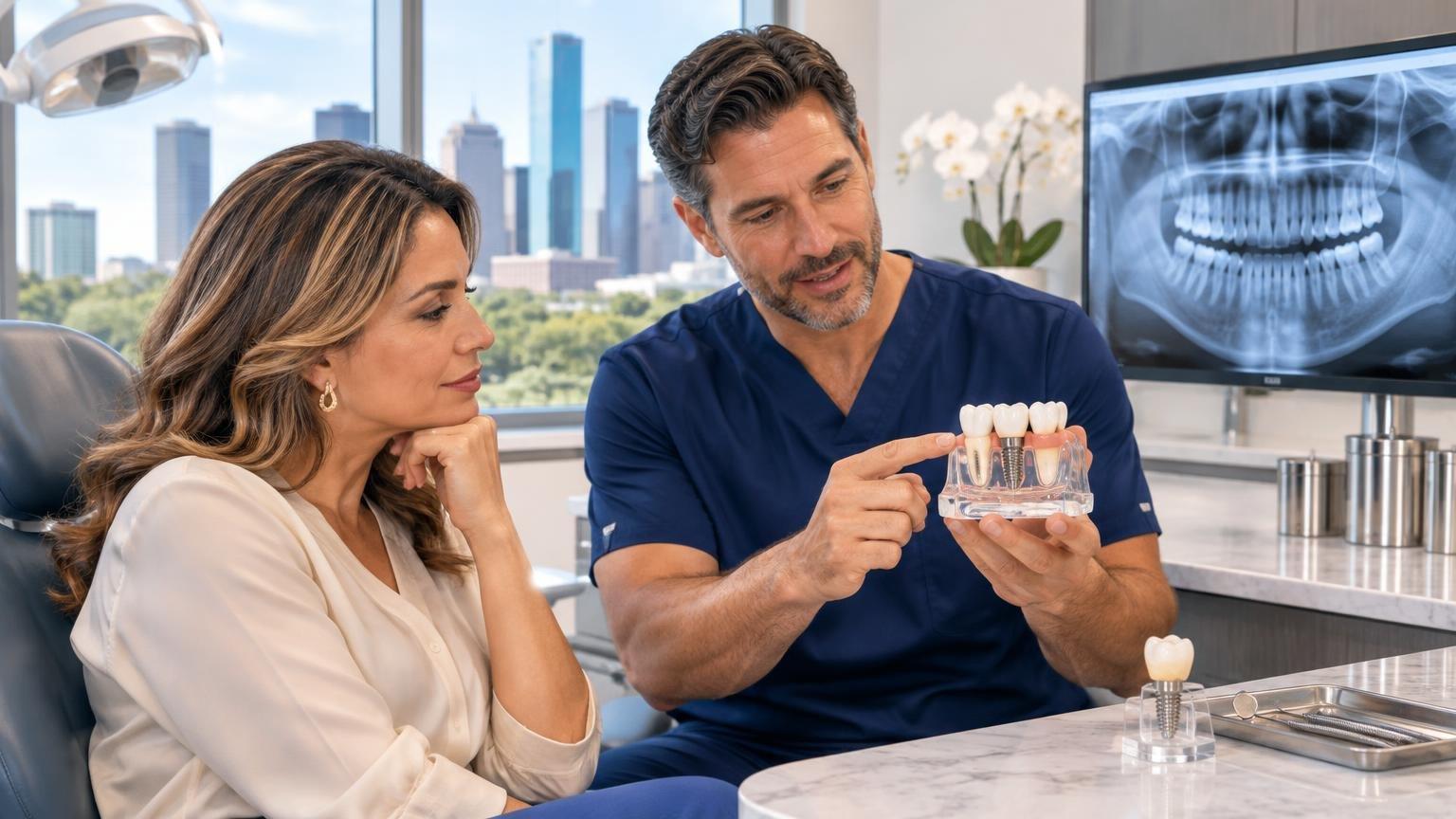
During an implant restoration evaluation, we look at the gum tissue, the stability of the implant, the condition of the crown or bridge, and your bite. X-rays or other imaging may be used when needed to get a clearer view of the supporting bone and implant area.
Bite pressure matters more than many people realize. Clenching, grinding, shifting teeth, or an uneven bite can place extra force on an implant crown or bridge. When we see signs of this type of pressure, we may discuss protective options such as a custom nightguard or a bite adjustment to help protect the restored tooth.
Addressing a small concern early may keep it from turning into a larger repair. When the implant foundation remains healthy, restoration can be a more conservative way to renew the look and function of your smile.
Signs an Implant May Need Replacement
Some symptoms point to a concern that deserves attention sooner rather than later. Ongoing pain, swelling, bleeding, drainage, gum recession, or recurring infection around an implant can signal a problem with the surrounding tissue or bone. If the implant post itself feels like it is moving, that is different from a crown that wiggles and should be examined professionally.
Possible warning signs include:
- Persistent soreness or pressure around the implant
- Swollen, bleeding, or receding gums near the implant
- Pus, drainage, or a recurring bad taste
- A feeling that the implant post, not just the crown, is loose
- Changes in how your teeth meet when you bite
Implant complications can have different causes. Bone support, peri-implant disease, trauma, teeth grinding, smoking, oral hygiene habits, and health factors that affect healing may all play a role. Not every implant problem is preventable, but earlier care can give us more options for protecting your oral health.
If replacement is needed, planning may include removal of the compromised implant, treatment for infection or inflammation, bone grafting when appropriate, and healing time before another implant is placed. Each timeline is personal. We explain each stage clearly and provide anxiety management options for patients who need extra comfort during dental care.
Your Treatment Plan From Evaluation to Final Smile
Your first visit starts with a conversation. We listen to what you have noticed, review your dental and medical history, examine the implant and nearby tissues, and assess your bite. Imaging helps us see whether the concern is limited to the crown or bridge, or whether the implant post and jawbone need attention.
When the implant is stable, treatment may include a new custom crown, bridge repair, abutment replacement, bite adjustment, or care for the surrounding gums. If the implant needs replacement, the plan may include removal, grafting, healing milestones, and a new implant-supported restoration when the area is ready.
Comfort, timing, and ongoing maintenance are part of the discussion too. We know dental fear can lead people to put off care, especially when the problem seems small. Our goal is to help you understand what is happening and what each treatment step is meant to accomplish.
Plan Ahead Before Year-End
A damaged implant crown, loose restoration, or new discomfort is worth checking before holiday schedules become crowded. Addressing an issue before travel, gatherings, and year-end deadlines can make it easier to plan care around your routine and review any remaining dental benefits.
The practical takeaway is simple: a restoration problem may be repairable when the implant foundation is healthy, while replacement may be needed when the post or supporting bone is compromised. Getting a professional evaluation gives you clear answers instead of leaving you to guess.
Restore Comfort And Confidence In Your Smile
At Palm Center Dental, we can help you understand your options for dental implant restoration in Houston, TX and recommend care suited to your needs. Our team will assess your implant, restoration, and surrounding tissues with careful attention to your long-term oral health. When you are ready for individualized guidance, contact us to schedule an evaluation.