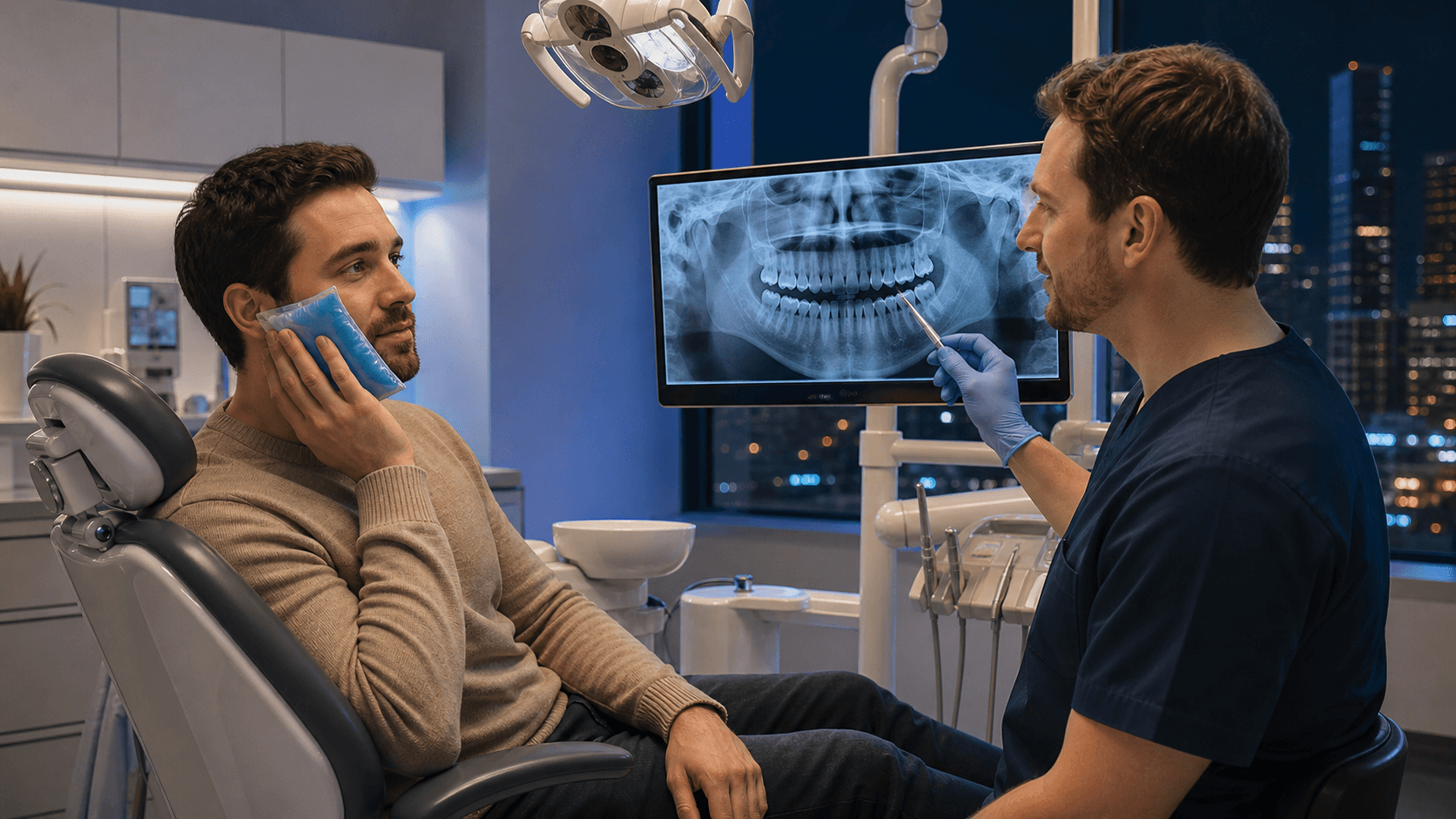
Late-night tooth pain has a way of showing up at the worst possible time. You are tired, you want to sleep, and suddenly your tooth or jaw starts throbbing. Around the holiday season, when stress, snacks, and late dinners are common, that surprise pain can feel even more annoying and a little scary.
In many cases, wisdom teeth are part of the problem, but not always. The good news is that not every sharp burst of pain means you need emergency surgery in the middle of the night. We will walk through what you can safely try at home, when it is okay to wait for a morning call to a dentist, and when wisdom teeth removal in Houston, TX, should not be delayed.
When Late-Night Tooth Pain Strikes Out of Nowhere
Tooth pain at night feels different. You are lying there in the quiet, and every little throb seems louder. Holiday plans, gatherings, and travel might already be on your mind, and now your jaw is pulsing along with your thoughts.
It is easy to jump straight to the worst-case idea: "Do I need my wisdom teeth out right now?" Sometimes wisdom teeth are the reason, especially if you notice soreness way in the back of your mouth. But:
- Not all nighttime pain is from wisdom teeth
- Not all wisdom tooth pain is an emergency
- Some problems can wait for a planned visit
Our goal is to help you read the signs. With a little guidance, you can decide if you should try home relief and rest, call a dentist first thing in the morning, or look for urgent help that same night.
Common Causes of Sudden Nighttime Tooth Pain
When you lie flat, more blood flows toward your head. That extra pressure can make a small dental problem feel a lot bigger. An old cavity that barely bothered you during the day might pulse strongly at midnight.
Common causes of nighttime tooth or jaw pain include:
- Cavities or deep decay
- Cracked or chipped teeth
- Lost or broken fillings or crowns
- Food stuck between teeth or under the gums
- Sinus pressure that makes upper teeth ache
- Teeth grinding or clenching while you sleep
Wisdom teeth are a little different. They sit all the way in the back, and when they act up, you may notice:
- Pain or pressure behind your last molars
- Swollen, puffy, or tender gums at the very back
- A bad taste or smell from that area
- Trouble opening wide or biting down fully
If the ache is focused right at the back corners of your jaw, and especially if those gums feel sore to the touch, your wisdom teeth could be part of the story.
Red Flags That Mean You Should Not Wait
Some symptoms are more serious and should not be ignored, even if it is late and you are busy with holiday plans. These can signal an infection that is spreading beyond the tooth or gums.
Watch for:
- Severe, constant pain that barely changes with pain medicine
- Swelling in your face, jaw, or cheek that seems to be getting bigger
- Fever, chills, or feeling very run down
- Trouble swallowing, speaking clearly, or breathing
- Pus, drainage, or a pimple-like bump near a tooth
These signs can mean the infection is moving into deeper spaces in the face or neck. In that case, the top priority is your health, not just the tooth. Urgent care, or an emergency room visit may be needed to control infection and protect your airway.
Wisdom teeth removal might still be part of your care, but it usually comes after things are more stable. First comes getting the infection under control, then planning the safest way to remove the tooth or teeth that started the problem.
When Wisdom Teeth Removal Can Safely Wait
Not every sore wisdom tooth needs to come out right away. Sometimes the better plan is to watch closely and pick a calm time for removal instead of rushing into an urgent surgery.
Waiting can be reasonable when:
- The pain is mild or dull and shows up only once in a while
- Over-the-counter pain medicine helps and the pain settles down
- There is little or no swelling in the face
- The pain does not wake you up every night or keep you from work or school
Dentists often keep an eye on wisdom teeth with exams and X-rays. For students or busy workers, that might mean timing removal around winter break or a slow week, rather than in the middle of a hectic holiday schedule.
To decide how urgent things are, a dentist will look at:
- How the wisdom teeth are positioned under the gums
- Whether they are pushing on other teeth or changing your bite
- Any signs of infection, like pockets around the tooth
- Damage to nearby teeth or bone
- Signs of cysts or other changes in the jaw area
If these risks are low, planning wisdom teeth removal in Houston, TX for a future date can be safe and smart.
Smart Home Relief Before You See the Dentist
If you are not seeing red flag symptoms, there are a few simple steps that may calm things down enough to get some sleep until you can see a dentist.
Try:
- Gently flossing around the sore tooth to remove trapped food
- Rinsing with warm saltwater, especially near the back gums
- Using a cold compress on the outside of your cheek for 10 to 15 minutes
- Taking over-the-counter pain medicine as directed, if it is safe for you
Some things are not safe, even if they sound like old home tricks. Avoid:
- Putting aspirin or other pills directly on the tooth or gums, which can cause burns
- Very hot compresses, which can increase swelling
- Poking, cutting, or trying to drain anything at home
Before you fall asleep, it can help to note a few details so you remember them later:
- When did the pain start?
- Is it sharp, dull, throbbing, or shooting?
- Does it get worse when you bite, bend over, or drink something cold or hot?
- Did you notice any swelling or fever?
That information is helpful for any Houston dentist who evaluates your wisdom teeth and the rest of your mouth.
Planning Wisdom Teeth Removal in Houston Before Pain Hits
The easiest wisdom tooth visit is often the one that happens before things hurt. Planning ahead gives you more control over timing, comfort, and recovery.
A typical planning process includes:
- An exam and digital X-rays to see where the wisdom teeth sit
- A talk about whether they are likely to cause problems later
- A review of sedation options to help you feel relaxed and comfortable
- Clear instructions for surgery day and the days after
This lets you plan for a ride home, light meals, and a few quieter days while you heal. In a busy city like Houston, where work and school schedules can be packed, that kind of planning can make life much easier.
At Palm Center Dental, we focus on comfort, clear communication, and long-term smile health when we look at wisdom teeth and other surgical needs. Our experience with both surgical care and dental implants supports a calm, steady approach, even when a painful tooth brings you in at a stressful time.
Take Control of Tonight's Pain and Tomorrow's Plan
Late-night tooth or jaw pain can feel scary, but a simple plan can help. Start by checking for red flags. If there is severe swelling, fever, trouble swallowing, or uncontrolled pain, it is time for urgent care. If the pain is mild to moderate, responds to home care, and you feel generally well, gentle relief and rest until morning may be enough.
Recurring nighttime pain, especially around the back of the mouth, is a sign that something needs attention, even if it quiets down during the day. Early evaluation helps prevent infection, protects nearby teeth, and lets you plan wisdom teeth removal in Houston, TX at a time that fits your life, instead of leaving it up to a late-night surprise.
Relieve Wisdom Tooth Pain With Expert, Comfortable Care
If your wisdom teeth are causing discomfort or you have been told they need to come out, we are here to help you move forward with confidence. Learn how our experienced team can make wisdom teeth removal in Houston, TX as smooth and stress-free as possible. At Palm Center Dental, we will walk you through your options, answer your questions, and create a personalized treatment plan. Ready to schedule or need more information first? Simply contact us today.