Dental crowns do a lot of quiet work in your mouth. They cover and protect teeth that have been weakened by decay, injury, or big fillings, so you can eat and talk without giving them a second thought. But over time, even a strong crown can get worn down or damaged. It might come loose, crack, or fall off completely. And when that happens, it usually doesn’t pick a convenient time, like the middle of December, right when things are already busy.
If you're noticing something off with a crown, or a tooth suddenly feels different, it could be a sign you need dental crown repair in Houston, TX. Taking care of it sooner rather than later can make a big difference in comfort and convenience, especially at the end of the year when schedules get tight.
What Can Go Wrong with a Dental Crown
Even though crowns are built to last, they’re not invincible. Just like natural teeth, they take on a lot of pressure every day, and sometimes they start to show signs of wear. Some of the most common problems people run into with crowns include:
- Tiny cracks or chips that make the crown feel rough
- Pain or sensitivity under the crown
- A crown that becomes loose or completely pops off
- Discomfort when biting down on one side of the mouth
These issues can happen for different reasons. Biting into hard foods, like nuts or hard candy, can crack the top of the crown. Grinding your teeth at night may slowly weaken the crown’s surface without you even noticing. It’s also possible for the tooth underneath to develop new decay, which can cause the crown to loosen. If there’s a sharp edge, a strange pressure when chewing, or tenderness around the gums near the crown, it’s a good idea to have it checked out.
What to Expect During a Crown Repair Visit
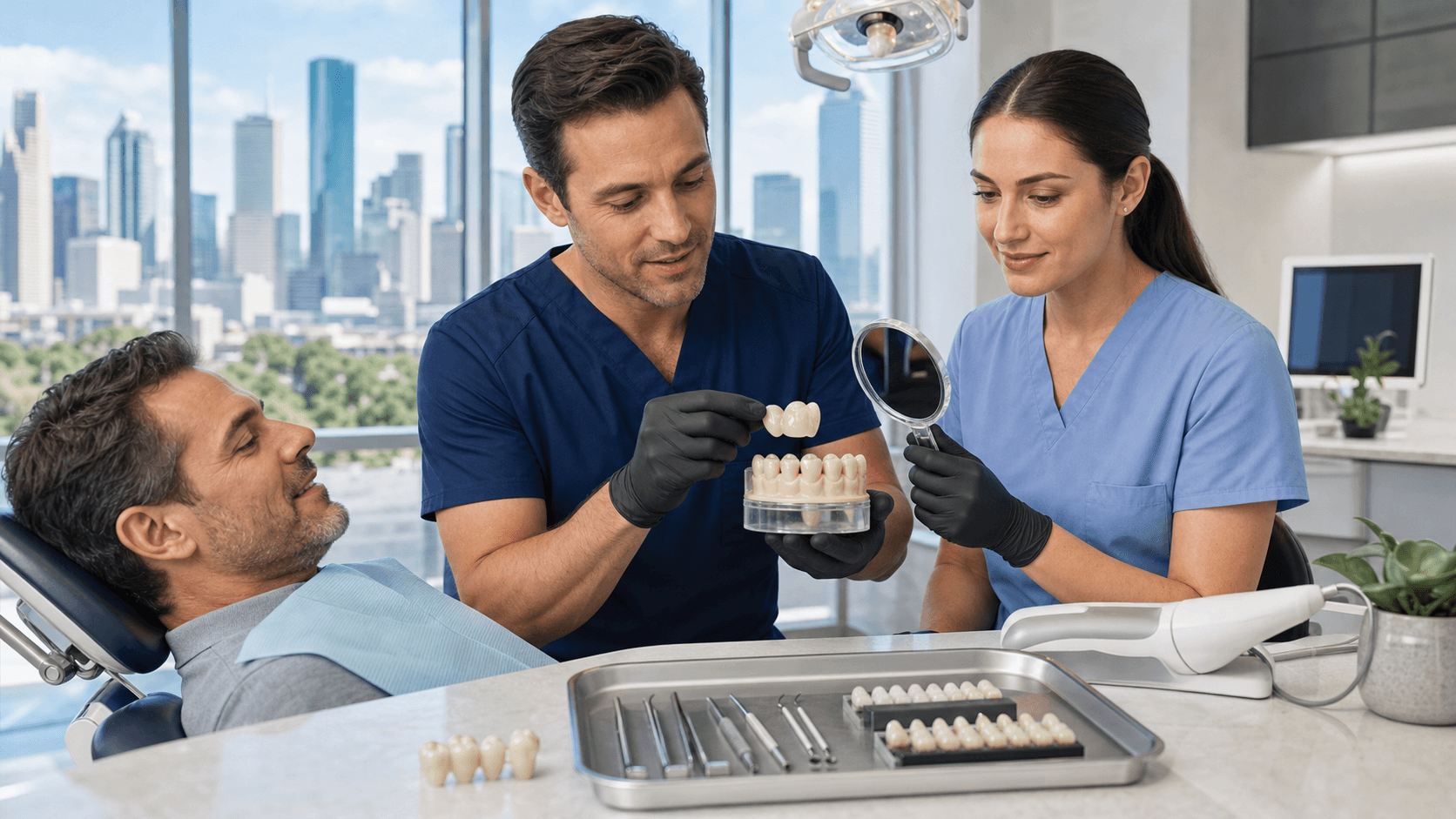
If something feels off with your crown, coming in for a visit can help figure out what’s going on. The first step is a close look at the tooth and the crown to see what condition both are in. We may also take an X-ray to check underneath the gumline or around the root of the tooth if there’s any concern about decay or infection.
Depending on what we find, we’ll talk through the options. Sometimes, if the crown is just loose, we can reattach or adjust it right away. If the crown is cracked or the tooth underneath needs more support, that might call for a full replacement.
In most cases, we’ll numb the area before doing any work, so you stay comfortable throughout. If a replacement is needed, we may place a temporary crown until the new one is ready. Our goal with any repair is to make the crown feel natural again so you can eat, smile, and talk without worry.
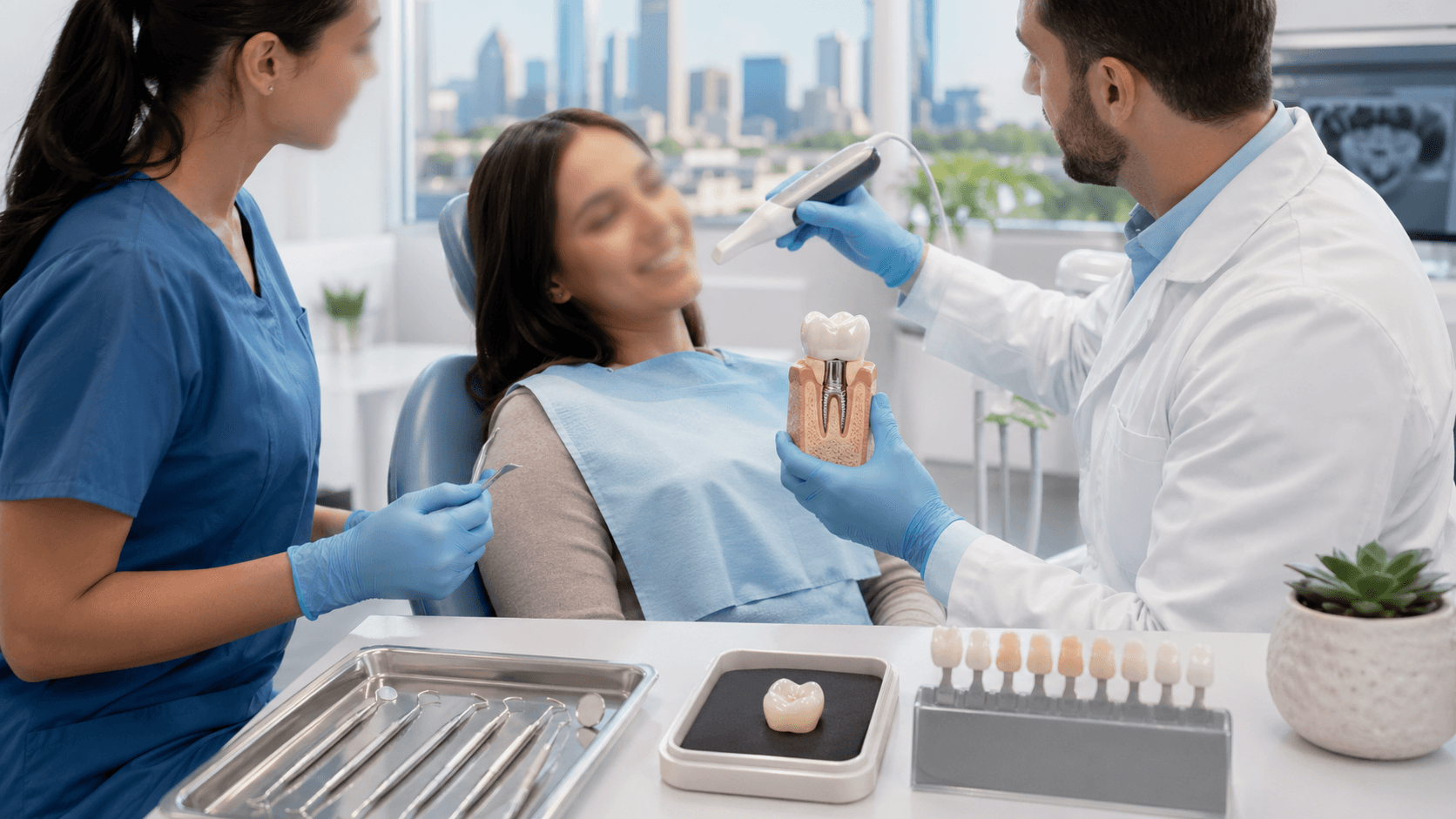
Palm Center Dental in Houston uses digital imaging and advanced materials to repair or replace dental crowns. Dr. Ayomide Ogunye customizes the shape and color of each crown for a natural look and comfortable fit, offering same-day appointments for urgent crown repairs and replacements.
How Winter Weather and Holiday Eating Might Affect Dental Crowns
December brings cooler temperatures, holiday get-togethers, and favorite seasonal treats. But if you’ve got a damaged crown, that extra activity can highlight problems you didn’t notice before. Cold air can make a crown-sensitive tooth sting a bit, especially if the seal between the crown and tooth has weakened. You may also feel more pain when sipping hot drinks or eating certain foods.
Some holiday favorites, like caramel candies or crunchy cookies, can be tough on crowns, especially ones that are already showing wear. Sticky foods can tug on a crown that’s not fully sealed anymore, and hard bites can widen small cracks quickly. If a crown falls off during the holidays, it can be especially stressful with limited scheduling or travel plans.
- Cold air or drinks can increase tooth sensitivity
- Sticky candies or chewy foods may loosen an old crown
- Cracked crowns might become more painful with crunchy treats
Getting ahead of possible trouble before the calendar fills up can help you avoid discomfort at the worst time of year.
How a Dentist Decides Between Repairing or Replacing Your Crown
Not every crown problem needs a full replacement. But it starts with understanding what kind of damage has happened and how long the current crown has been in place. Many crowns last for years, but changes in the mouth or the tooth underneath can shorten that time.
The material of the crown can matter too. Some materials handle biting pressure better than others. If a porcelain crown has chipped near the gumline or a metal one shows signs of lift, a repair might be enough to hold it in place again. On the other hand, if the crown doesn’t fit well anymore or the tooth underneath is decayed, replacing it might give better, longer-lasting results.
Catching problems early usually allows for more choices. A small adjustment now might help you avoid a bigger issue later, especially when year-end calendars are already packed.
Tips to Help Your Crown Last Longer
A healthy crown can feel almost like a natural tooth, but a little extra care goes a long way in keeping it that way. Even habits you already do can make a big difference.
- Brush and floss your teeth every day to keep the area around the crown clean
- Skip hard candies, ice cubes, or pens that can chip the crown
- Wear a night guard if you grind your teeth while sleeping
- Use the back teeth to chew tougher foods at holiday meals
- Come in for regular check-ups to keep an eye on changes before they turn into problems
Staying on top of your oral care isn’t about doing anything extra. Just paying attention to your comfort level and noticing small changes in how your bite feels can help stop tooth or crown trouble before it gets worse.
Keep Your Crown and Your Smile Safe This Season
Crowns play a big role in your smile’s comfort and strength. When they hold up well, it’s easy to forget they’re even there. But once something isn’t quite right, whether it’s pain, looseness, or a strange edge, it’s worth taking a closer look. Small problems in a crown can grow fast if they’re ignored, especially during busy months filled with cold air and holiday foods.
By knowing what to watch for and taking action early, you can avoid bigger repairs and stay comfortable through winter. Dental crown repair in Houston, TX doesn’t have to be stressful, especially if you act before a minor issue turns into something more complicated. Catching early signs and responding quickly helps protect more than just a crown, it keeps everything else running smoothly too.
When you're feeling discomfort with an older crown or starting to notice signs of wear, it's a good time to look into treatment options. Cracks, looseness, or pain that doesn't go away could mean something more is going on beneath the surface. We recommend getting it checked before winter meals or holiday travel add to the stress. For more about how we approach dental crown repair in Houston, TX, contact Palm Center Dental today.