Get a Whiter Smile Without Ruining Your Veneers
Teeth whitening and veneers can look great together, but they do not react the same way to treatment. When we whiten teeth, the gel lifts stains from natural enamel. Veneers are made from porcelain or ceramic, so the color is baked in and does not change with regular whitening.
This is why many people are surprised after a whitening visit. Their natural teeth get brighter, but their veneers stay the same shade. The result can be a smile that suddenly looks uneven, even though nothing is actually wrong with the veneers themselves.
Here in Houston, fall means back-to-school events, tailgates, holiday parties, and lots of photos. It is a common time for people to want a fresh, bright smile. If you already have veneers and are thinking about teeth whitening in Houston, TX, it helps to know what will change, what will not, and which options can give you a smooth, even color.
How Whitening Affects Natural Teeth vs. Veneers
Professional whitening gels are designed to work with natural tooth enamel. They move into the tiny pores in the tooth surface and break apart stains from things like food, drinks, and age. Veneers, crowns, and most ceramic materials do not have these same pores, so the whitening gel does not lighten them.
Over time, it is normal for natural teeth to darken. Common stain makers include:
- Coffee and tea
- Red wine and colored drinks
- Tobacco products
- Sauces and deeply colored foods
Veneers are more stain resistant than natural teeth, but they can still pick up small surface discoloration, especially around the edges. That mild surface staining can often be polished, but the base color of the veneer does not change.
When you get teeth whitening in Houston, TX, and you already have veneers, a few things can happen:
- Your natural teeth can brighten several shades.
- Your veneers stay the same base color.
- The brighter teeth around the veneers can make those veneers look darker by comparison.
Lighting plays a big role too. Indoor lighting at fall events, office parties, and family gatherings can make even small color differences stand out in photos. Filters and phone camera settings can also highlight tiny shade changes that you might not notice in the mirror.
When Veneers Start to Look "Off" in Color
There are a few common reasons veneers start to look a little off compared to the rest of your smile. One is timing. Many people get veneers at a time when their natural teeth are darker, then decide to whiten years later. The natural teeth brighten, but the veneers stay at the older, deeper shade.
Other common situations include:
- Whitening done at a different time than veneer treatment, without planning for the final color.
- Gradual gum recession, which exposes darker tooth structure near the top edge of the veneer.
- Small changes in your bite that change the way light hits your teeth.
Even a tiny shade mismatch can show up in close-up pictures. Holiday selfies, school photos, or new work headshots can make one or two teeth look slightly too dark, too bright, or just not quite the same as their neighbors.
When a dentist checks for shade mismatch, they will usually:
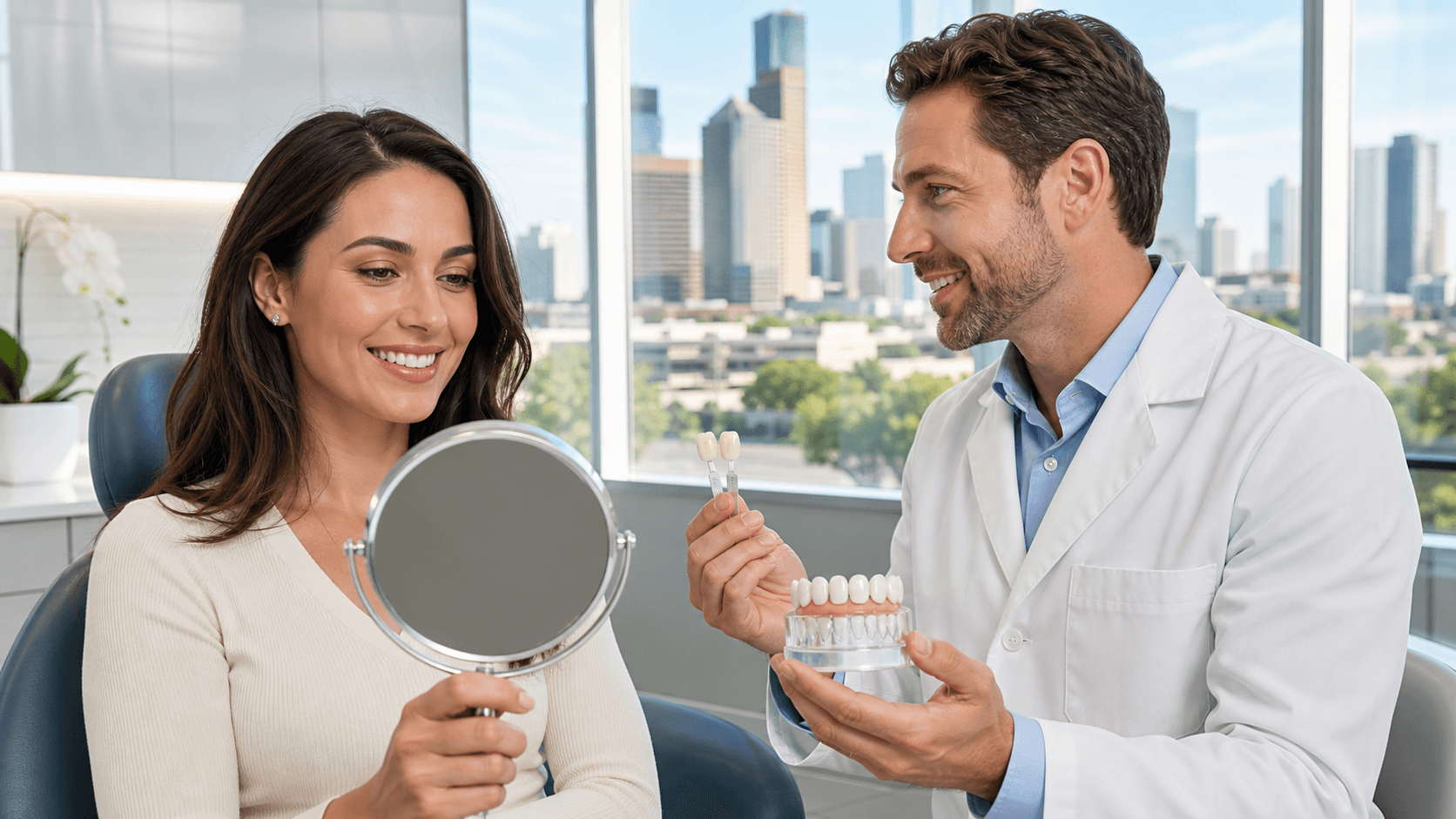
- Compare the color of your veneers to nearby natural teeth in different lights.
- Look at how light reflects off the veneer surface compared to enamel.
- Check the shape, length, and style of the veneers to see if they still fit your face and smile.
Sometimes the problem is not only color. Older veneers may have small chips, worn edges, or a style that no longer looks natural to you. All of these details play into how even and bright your smile looks as a whole.
Your Best Options: Veneer Replacement, Bonding, or Whitening
When you want a whiter smile and you already have veneers, there is no single "right" answer. The best plan depends on how many veneers you have, how old they are, and how different the shades are now.
Whitening surrounding teeth works well when:
- You are mostly happy with your current veneers.
- The veneers are in good shape and still match each other.
- You want the rest of your teeth to blend in more smoothly.
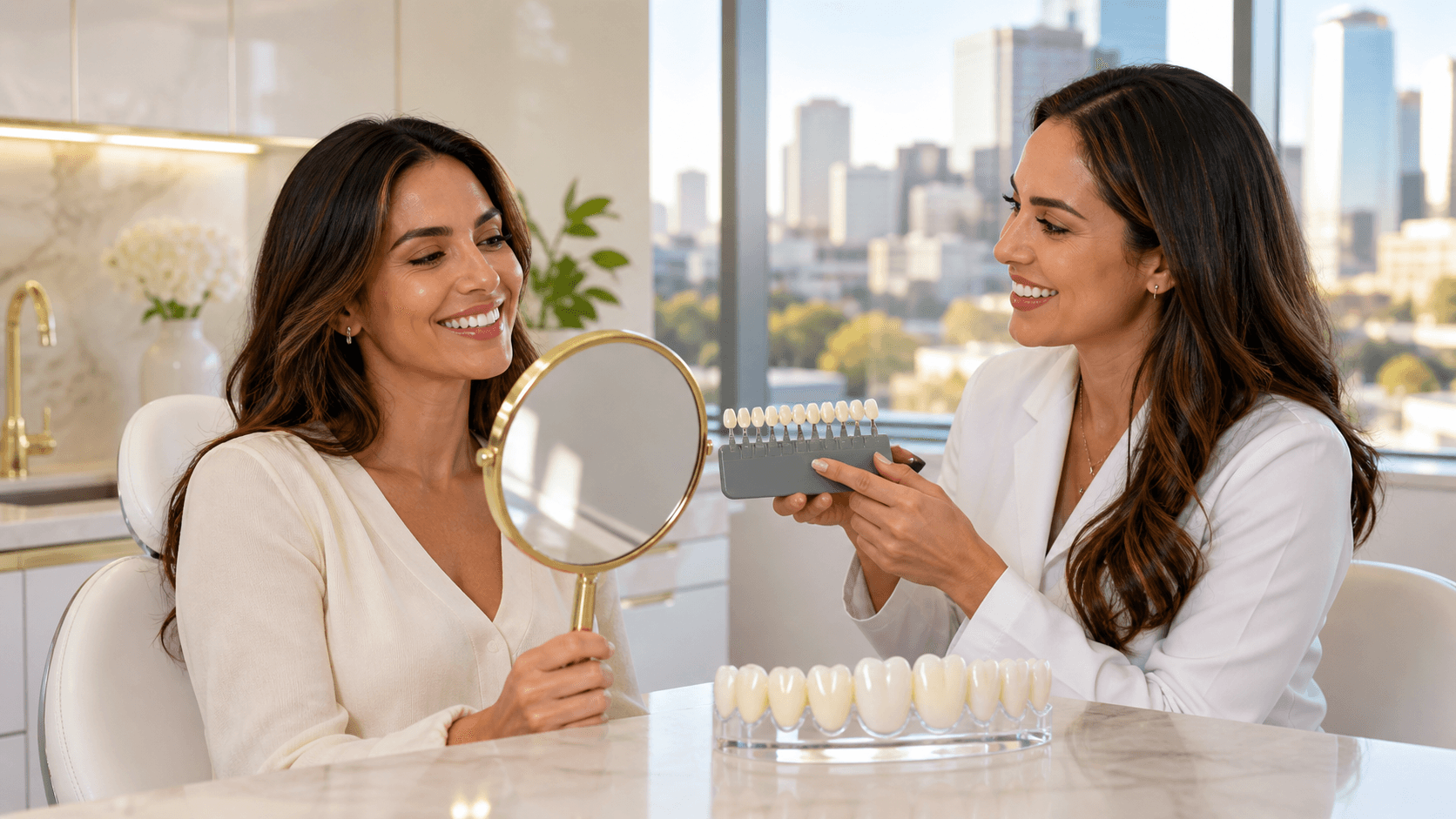
In these cases, whitening can be done with a goal shade in mind. Your dentist can choose a level of whitening that brings your natural teeth closer to your veneers, instead of going as bright as possible and making the mismatch stronger.
Veneer replacement or adding more veneers is usually best when:
- The veneers are much darker than the rest of your smile.
- There is visible wear, chipping, or an older style that no longer looks natural.
- You want a major smile update, not just a small refresh.
With this plan, we often whiten the natural teeth first. Then we design new veneers that match that brighter, fresher shade. Some people also decide to extend veneers to more teeth, so the entire visible smile has one smooth, even color and shape.
Dental bonding and contouring can help when the issues are small:
- Tiny chips or rough edges on veneers.
- Slight color difference at the margins where veneer meets enamel.
- A tooth that looks a bit shorter or thinner than the rest.
Bonding uses tooth-colored resin to gently adjust shape and the way light hits the tooth. While it will not change the base color of a veneer, it can make transitions look softer and the whole smile look more balanced.
Planning Your Whitening and Veneers in the Right Order
If you do not have veneers yet but are thinking about them, the easiest path is to whiten first. Professional teeth whitening in Houston, TX can bring your natural teeth up to a brighter shade that still looks natural for your skin tone and smile. Once that color has settled, new veneers can be designed to match that ideal shade.
A simple timeline often looks like this:
- First visit for a full exam, photos, and shade discussion.
- A few sessions of professional whitening or a custom take-home kit.
- A short wait to let the shade stabilize.
- Veneer planning, design, and placement before the busiest part of the holiday season.
If you already have veneers, the planning is more customized. A dentist can:
- Decide which teeth to whiten and how much to brighten them.
- See whether one or two veneers should be replaced to match the new shade.
- Blend whitening, bonding, and selective veneer updates to refresh your smile in a budget-conscious way.
This kind of planning is especially helpful in early fall, when many people in Houston start thinking about family gatherings, school events, and year-end celebrations.
Take the Next Step Toward a Confident, Evenly White Smile
Over-the-counter whitening kits can be tempting, but they are not made to handle veneers and natural teeth in a smart, balanced way. Without a plan, it is easy to end up with uneven color or sensitive teeth that are hard to touch when you drink something cold.
At Palm Center Dental in Houston, we focus on smiles that look natural in person and in photos. Dr. Ayomide Ogunye and our team use careful shade matching, gentle whitening options, and custom veneer and bonding plans to bring everything together. When veneers and whitening are planned as a team, you can enjoy a bright, even smile that feels like the best version of you.
Reveal a Brighter, More Confident Smile Today
If you are ready to see how a whiter smile can boost your confidence, we invite you to explore our professional options for teeth whitening in Houston, TX. At Palm Center Dental, we tailor each whitening treatment to your smile goals so you can enjoy noticeable results safely and comfortably. To schedule your visit or ask questions, simply contact us and our team will help you take the next step.